Book Athens Transfers to Panathenaic Stadium

Book Athens Transfers to Panathenaic Stadium

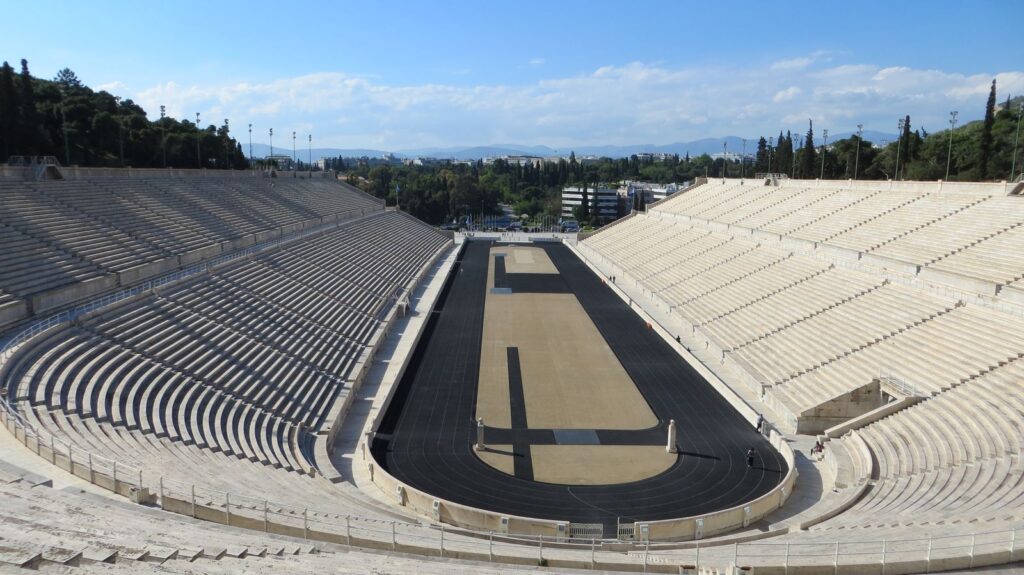
Traveling from Athens International Airport to the Panathenaic Stadium, also known as Kallimarmaro or the beautiful marble one, is a journey to one of the most symbolically charged athletic venues in the world, and organizing your athens transfer in advance is the right way to begin. Built originally in 330 BC to host the Panathenaic Games, then completely reconstructed in white Pentelic marble for the first modern Olympic Games in 1896, it remains the only stadium in the world built entirely of marble and continues to host athletic events today.

Book Athens Transfers to Panathenaic Stadium

Distance and Travel Time from Athens Airport to Panathenaic Stadium

Athens International Airport Eleftherios Venizelos is approximately 35 kilometers from the Panathenaic Stadium, and the journey typically takes between 35 and 55 minutes depending on traffic and the time of day.

The stadium sits in the Pagrati neighborhood at the foot of the Ardettos Hill, on the southern edge of the historic center. The surrounding streets are relatively quiet compared to the busier tourist zones near the Acropolis, making it an easier arrival point for someone coming directly from the airport with luggage.

Book Athens Transfers takes all of that out of your hands before you land. A professional driver handles the route and timing from the airport directly to the stadium entrance, getting you there efficiently and on time.

Where Olympic Dreams Began in the Modern Era

The history of the Panathenaic Stadium is the story of Athens’ relationship with its own antiquity and how that city chose to mark its position in the modern world. The original stadium was commissioned in 330 BC by the Athenian statesman Lycurgus, carved into a natural valley to host the athletic competitions of the Panathenaic Games, the most important religious festival in honor of Athena, the city’s patron goddess.

In 144 AD, during the Roman period, the wealthy patron Herodes Atticus transformed the original stone stadium into a marble masterpiece, giving it the form that would survive for centuries. The stadium could hold approximately 50,000 spectators and was one of the most impressive athletic venues in the entire Roman world.

The stadium fell into ruin over the following centuries, gradually destroyed and quarried for building material. By the nineteenth century it was little more than a scattered collection of marble fragments across a hillside. But when Pierre de Coubertin, the French baron who founded the modern Olympic movement, decided that the first modern Olympic Games should be held in Athens to honor the ancient tradition, Greece faced the challenge of restoring a monument that barely existed in any coherent form.

In 1896, a wealthy Greek philanthropist named George Averoff provided the funding to completely reconstruct the stadium in time for the Games. Working at extraordinary speed, Greek architects and builders managed to restore the Panathenaic Stadium to something close to its ancient grandeur in just eleven months. The reconstruction used only the finest Pentelic marble, the same white stone that had been used for the Parthenon, and the stadium’s bright marble surface became one of the most recognizable images of those first modern Olympic Games.

On April 6, 1896, eighty thousand spectators filled the restored stadium to watch the opening ceremony of the first modern Olympic Games. The scene was electric. For the first time in fifteen hundred years, the Olympic tradition had been revived, and Athens was the city where it happened. The marathoners started from Marathon and finished at the Panathenaic Stadium, with the Greek runner Spyros Louis winning the race that captured the public imagination more than any other event of those Games.

The stadium has hosted athletic events continuously since 1896, including the 1906 Intercalated Games and, more recently, archery events and the marathon finish during the 2004 Olympics when Athens hosted the Games again. It remains in active use as a venue for concerts, cultural events, and athletic competitions, making it one of the oldest continuously used stadiums in the world.

Private Transfer from Athens Airport to Panathenaic Stadium

A private transfer with Book Athens Transfers is the most comfortable and reliable way to travel from Athens Airport to the Panathenaic Stadium. From the moment you walk through arrivals, your driver will be there with your name on a sign, ready to take your luggage and escort you to the vehicle without any waiting or confusion.

Real-time flight monitoring is built into every pre-booked private athens transfer with Book Athens Transfers. Whether your flight lands on time, early, or delayed, your driver has already adjusted the pickup accordingly. Nothing needs to be managed or rearranged from your end.

The service is door-to-door from the terminal directly to the stadium entrance, with no shared stops or detours. Fixed pricing confirmed at booking means the full cost is clear before you travel, with no surprises waiting on arrival.

Premium Transfer for a Return to Olympic History

The Panathenaic Stadium is one of the most symbolically significant athletic venues in the world, and a premium transfer from Book Athens Transfers is a fitting way to begin that kind of historically charged visit. Premium vehicles include executive sedans or high-end cars offering a quiet, refined, and thoroughly comfortable journey from the airport directly to the stadium.

A premium athens transfer suits athletes, Olympic enthusiasts, and history-minded travelers for whom visiting Kallimarmaro is a pilgrimage of sorts, as well as any guest who simply prefers the quality of an executive vehicle after a long-haul flight.

Booking a premium transfer in advance with Book Athens Transfers is also the most dependable way to secure your vehicle, particularly during the busier travel months.

Athens Airport Minivan for Groups and Touring Parties

The Panathenaic Stadium is a regular stop for guided tours of Athens and for athletic pilgrimage groups, and for larger parties arriving from the airport together, an Athens Airport Minivan from Book Athens Transfers is the most practical solution.

Minivans offer comfortable seating and generous luggage space, keeping the entire group in one vehicle from the arrivals terminal straight through to the stadium. For touring groups where everyone needs to arrive together and on schedule, a minivan from Book Athens Transfers removes all coordination difficulty. When booking your athens transfer, simply provide your passenger numbers and luggage details, and the right vehicle will be confirmed and ready when you land.

The World's Only All-Marble Stadium Deserves a Planned Arrival

Taxis from Athens International Airport operate on fixed fares and are available around the clock, but for a destination as specific and as historically significant as the Panathenaic Stadium, the unpredictability of a rank taxi is worth avoiding. Queue times during busy arrival periods can be significant, and there is no flight monitoring, no assigned driver, and no guarantee on vehicle quality.

The Panathenaic Stadium is an experience that goes beyond typical tourism. Standing in a stadium made entirely of white marble, knowing that the same track has hosted Olympic athletes from 1896 to the present day, is genuinely moving. Arriving at a place of such historical weight requires arriving with time and energy intact.

The World’s Only All-Marble Stadium Deserves a Planned Arrival

Booking your athens transfer with Book Athens Transfers puts a professional, experienced driver in charge of the full journey from the airport to Kallimarmaro. With solid knowledge of the Pagrati neighborhood and the surrounding areas, your driver will have you there smoothly and on time.

Admission to the stadium is ten euros for adults and includes access to the running track, the marble seating tiers, the on-site museum documenting Olympic history, and a self-guided audio tour. One of the most special experiences available is the opportunity to actually run on the track, something visitors can do as part of standard admission. The feeling of running on the same marble surface where the first modern Olympians ran is extraordinarily moving.

Allow ninety minutes to two hours for a complete visit including time in the museum and on the track. The stadium is open daily with seasonal hours, and it is best visited in the morning or late afternoon to avoid the strongest summer heat that the marble can reflect.

Whether you choose a standard private vehicle, a premium transfer, or an Athens Airport Minivan, organizing your ride with Book Athens Transfers means you arrive at the Panathenaic Stadium ready to step onto one of the most historically charged athletic venues in the world.

Share this post