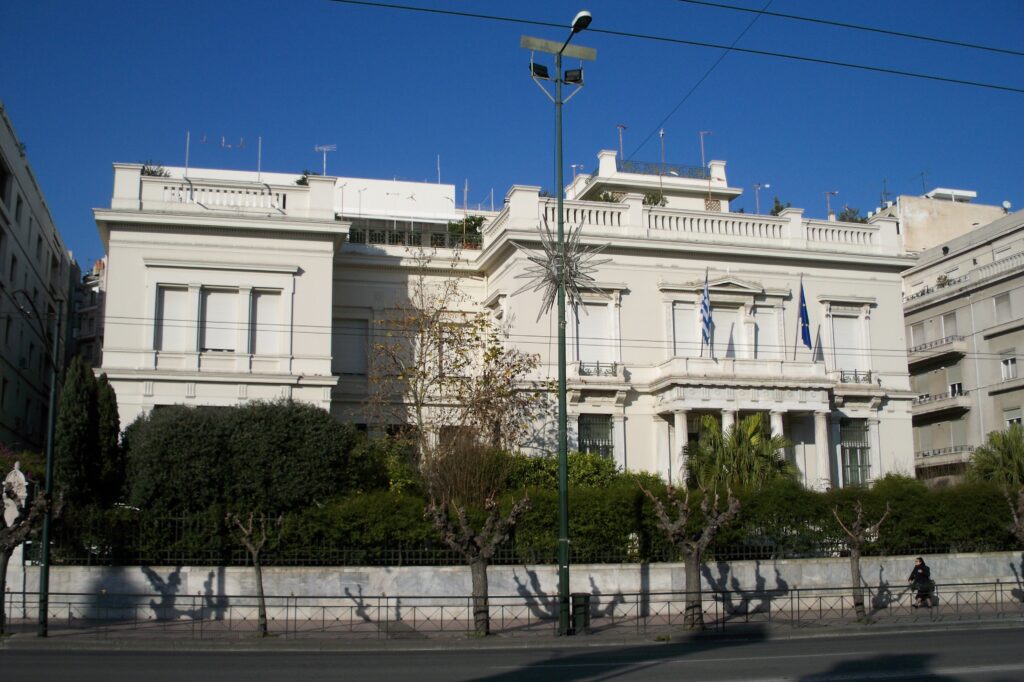
The Benaki Museum of Greek Culture is the oldest museum operated by a private foundation in Greece and one of the most beloved cultural institutions in the country. Antonis Benakis, a wealthy collector born into a prominent Greek family in Alexandria, spent decades assembling an extraordinary personal collection of Greek art and artifacts before donating both the collection and his family mansion to the Greek state, creating a museum whose stated mission is to present Greek art and material culture in a continuous historical arc from prehistory to the present day.
What makes the Benaki so distinctive among the museums of Athens is precisely this sweep. Where other institutions specialize in a single period or category, the Benaki tells the whole story of Greek civilization in one place, allowing visitors to trace an unbroken thread across more than five thousand years.
The ground floor begins with the earliest periods, presenting Neolithic tools and figurines, Cycladic marble vessels and the famous minimalist figurines, and Mycenaean gold and pottery, followed by the geometric, archaic, classical, Hellenistic, and Roman periods, each represented by fine examples of ceramics, sculpture, and jewelry. The transition from the ancient world to the Byzantine era is illustrated through textiles, oil lamps, clay figurines, and a rare group of Coptic works from Alexandria.
The Byzantine collection includes manuscripts, jewelry, mosaics, and a superb group of icons, revealing the profound impact of Christianity on Greek art. Byzantine jewelry displays a clear continuation of Roman forms and techniques, with golden necklaces and earrings set with precious stones and pearls, alongside crosses, reliquaries, and miniature icons.
The upper floors carry the story forward through the post-Byzantine centuries of Frankish and Ottoman occupation, presenting ecclesiastical art, traditional costumes, embroidery, wood carvings, ceramics, and metalwork from across the Greek world, including Greek communities that flourished outside the borders of the modern state. The collection culminates in the historical heirlooms of modern Greece, recreating the story of the nation from the late eighteenth century through the War of Independence and the formation of the modern Greek state.
Among the most treasured objects are two reconstructed reception rooms from eighteenth-century mansions in northern Greece, their intricately carved and painted wooden interiors transferred and reassembled within the museum, offering a vivid glimpse into the domestic splendor of the Greek world under Ottoman rule.
The main mansion is the flagship of what has grown into a network of several Benaki Museum sites across Athens, including a separate museum of Islamic art and a major contemporary exhibition space on Pireos Street, but the main building remains the essential starting point for understanding the full sweep of Greek culture.